
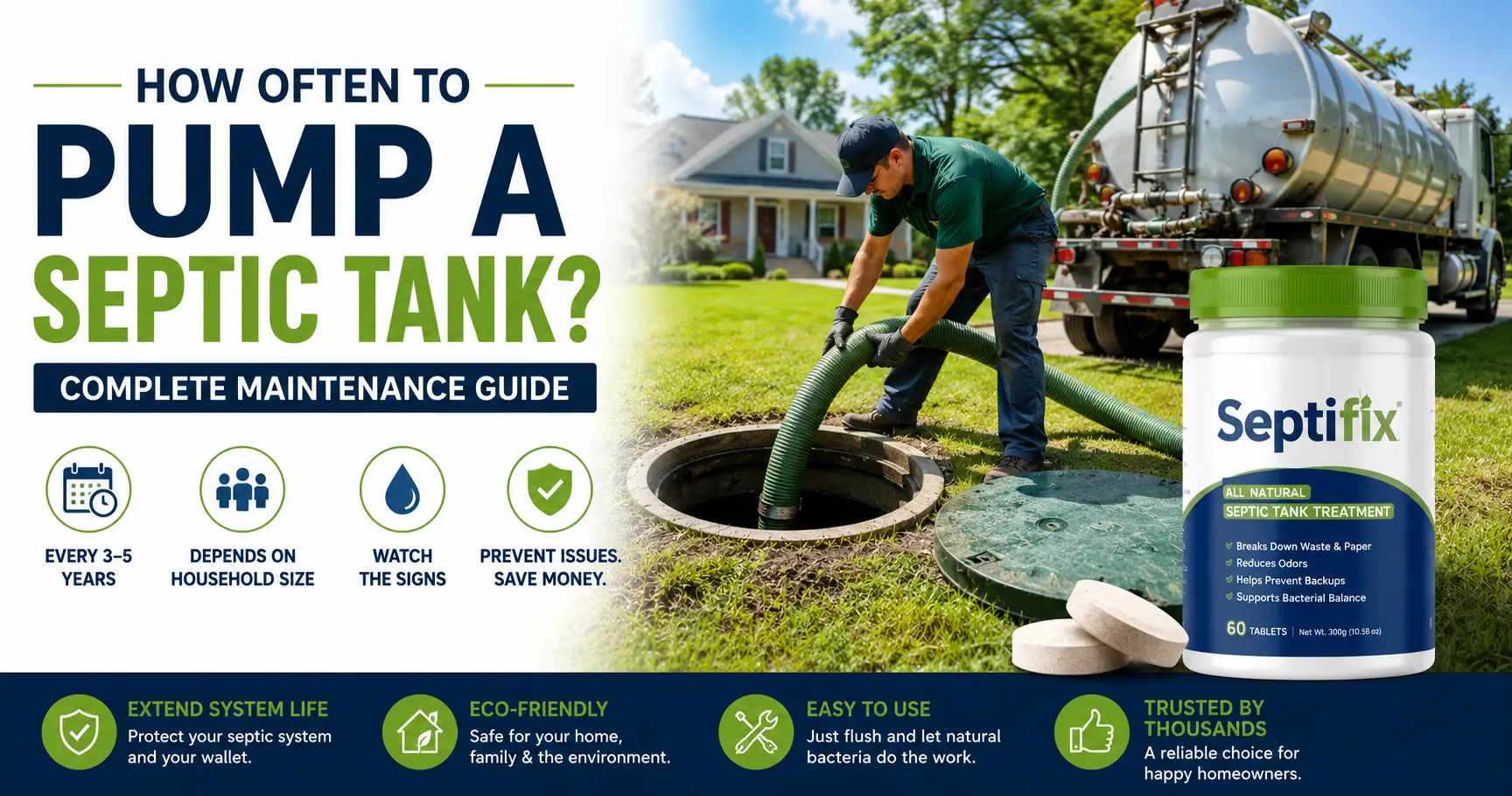
Quick Answer
Have your septic system inspected at least every 3 years and expect to pump the tank approximately every 3 to 5 years, unless your inspection results, system design, or local requirements call for a different schedule.
Official guidance: US EPA — How to Care for Your Septic System.
 Check Septifix Price
Affiliate link. We may earn a commission at no extra cost to you. Treatment products do not replace inspection or pumping. Affiliate disclosure.
1. How Often Should You Pump a Septic Tank?
For an average household septic system, the EPA says the system should be inspected at least every three years by a septic service professional, and that household tanks are typically pumped every three to five years.
These are starting points, not fixed deadlines for every property. Your actual septic tank cleaning frequency depends on how quickly solids accumulate and how much wastewater enters the tank.
A small tank serving a large household may need more frequent pumping than a larger tank serving fewer people. Frequent garbage disposal use can also increase the amount of solids entering the tank.
| Maintenance activity | General recommended frequency |
|---|---|
| Professional septic system inspection | At least every 3 years (some professionals recommend more often) |
| Septic tank pumping | Typically every 3 to 5 years |
| Inspection of more complex alternative systems | Generally about once a year, per the EPA (systems with pumps or mechanical parts) |
| Additional inspection or pumping | As recommended by the professional based on system condition |
Some systems require more frequent attention because they contain pumps, electrical controls, or other mechanical components. Always follow your system manufacturer's guidance and applicable state or local requirements.
Septic tank pumping vs. septic tank cleaning
Homeowners often use the terms septic tank pumping, septic tank cleaning, and septic tank emptying interchangeably.
In routine maintenance, pumping generally refers to removing accumulated sludge, scum, and wastewater from the tank using specialized equipment. Inspection is a separate activity that checks the condition and operation of the system.
A septic tank does not need to be pumped simply because a particular number of years has passed. The decision should account for the tank's condition, accumulated solids, service history, and professional recommendations.
2. How Often Should You Clean a Septic Tank Based on Household Size?
Household size is one of the factors that influences septic tank pumping frequency. More people usually mean more wastewater entering the system and potentially faster accumulation of solids.
However, household size alone cannot determine the correct schedule. Tank capacity, water use, garbage disposal habits, and actual sludge accumulation matter too.
| Household situation | What to consider |
|---|---|
| 1 to 2 people | A longer interval may be possible with a sufficiently sized tank and low solids accumulation |
| 3 to 4 people | Use the general 3-to-5-year guideline as a starting point and confirm timing through inspection |
| 5 or more people | A larger wastewater load may require more frequent inspection and pumping |
| Frequent garbage disposal use | More food waste enters the tank, potentially increasing solids accumulation |
| Small tank serving a busy household | The tank may require more frequent pumping than a larger tank serving fewer people |
| Unknown maintenance history | Arrange an inspection to establish the tank's condition and appropriate pumping schedule |
These are planning considerations, not guaranteed pumping intervals. Two homes with the same number of occupants may have different maintenance needs.
Best practice: Ask your septic professional to record the sludge and scum levels during each inspection. Over time, these records help establish a pumping schedule based on your household's actual conditions.
3. What Affects Septic Tank Pumping Frequency?
Several factors determine how often a septic tank needs pumping.
Tank size and capacity
A larger tank generally provides more capacity for wastewater and accumulated solids than a smaller tank serving the same household. However, a larger tank does not eliminate the need for inspection and pumping.
If you do not know your tank's capacity, check your property records or ask a septic professional to identify the system.
Number of people in the household
More occupants generally produce more wastewater and contribute more solids to the tank.
Changes in household size can therefore affect the maintenance schedule. A tank that served two people may need attention more frequently when the household grows.
Water usage
Excessive water use can overload a septic system. Long showers, leaking toilets, frequent laundry loads, and several water-intensive activities occurring together can send more wastewater into the tank than the system can handle comfortably.
Repair leaks and spread out laundry and dishwasher use where practical.
Garbage disposal use
Garbage disposals send additional food particles into the septic tank. This can increase the amount of solids that accumulate and may mean more frequent pumping is needed.
Minimizing food waste entering the disposal can help reduce the load on the system.
What goes down the drain
Wipes (even "flushable" ones), paper towels, grease, cooking oils, and other unsuitable materials can contribute to plumbing blockages or septic system problems.
Flush human waste and toilet paper only. Dispose of household waste and chemicals according to local guidance.
Age and condition of the system
Older systems may have damaged components, deteriorating pipes, or other problems that affect performance. An inspection can help identify these issues.
Pumping removes accumulated material, but it does not repair a cracked tank, damaged baffle, blocked pipe, or failing drain field.
Sludge and scum accumulation
The amount of accumulated solids is one of the most important factors in deciding when a septic tank needs pumping.
A professional can measure sludge and scum levels and assess whether pumping is necessary. Your professional will compare these levels with the tank's design to decide whether pumping is due.
Learn more: EPA — How to Care for Your Septic System.
4. Signs Your Septic Tank Needs Pumping
Do not wait until your next scheduled service if you notice symptoms that may indicate a septic system problem.
Common warning signs include:
- Multiple sinks, showers, or toilets draining slowly.
- Gurgling sounds from plumbing fixtures.
- Persistent sewage odors inside the house or around the tank.
- Standing water or unusually wet ground near the drain field.
- Unusually green or spongy grass over the drain field during dry weather.
- Sewage backing up into toilets, sinks, or showers.
These symptoms can indicate a full tank, but they can also result from blocked pipes, clogged filters, excessive water use, or a failing drain field.
If sewage backs up into your home or surfaces in your yard, reduce water use, avoid contact with the wastewater, keep children and pets away, and contact a qualified septic professional urgently.
Read our related guide: Signs Your Septic Tank Is Full.
Can a septic tank need pumping without showing symptoms?
Yes. A tank may accumulate substantial sludge and scum before obvious symptoms appear.
That is why routine inspections are important even when toilets and drains seem to be working normally. Waiting for a sewage backup is not a reliable maintenance strategy.
5. What Happens During Professional Septic Tank Pumping?
Professional septic tank pumping removes accumulated sludge, scum, and wastewater using specialized equipment (more in what happens during septic tank cleaning). The service should also help you understand the condition of your system and whether any maintenance is required.
A typical appointment may involve the following steps.
Step 1: Locate and access the tank
The technician identifies the tank and accesses its inspection or service openings using appropriate procedures.
Step 2: Inspect the tank and components
The technician may examine the tank structure, inlet and outlet components, baffles, and effluent filter if installed.
Step 3: Measure sludge and scum levels
Checking the accumulated solids helps determine whether pumping is required and provides information for planning future maintenance.
Step 4: Pump out the accumulated material
The technician uses specialized equipment to remove the tank's contents and accumulated solids as appropriate for the system.
Step 5: Record the findings
Ask for a service record that documents the pumping date, tank condition, relevant measurements, and any recommended repairs.
Step 6: Establish the next maintenance date
Use the technician's findings to plan the next inspection and pumping interval rather than automatically choosing the same number of years for every service.
Safety note: Never enter a septic tank or lean into an open tank. Septic tanks can contain toxic gases and present serious fall and engulfment hazards.
6. How Much Does Septic Tank Pumping Cost?
The cost of septic tank pumping varies across the United States (see our septic pumping cost guide). There is no single price that applies to every property.
Factors that can influence the final quote include:
- Tank size and accessibility.
- Your location and the distance traveled by the service provider.
- The amount of accumulated material.
- Whether access covers or risers need additional work.
- Whether inspection, filter cleaning, or other services are included.
- Whether repairs or emergency services are required.
For an accurate estimate, request quotes from two or three qualified local providers. Ask what the quoted price includes, whether additional charges may apply, and whether you will receive a written service record.
Do not compare providers on price alone. Confirm that they are appropriately licensed or qualified under your local requirements and can dispose of septic waste legally.
7. How to Maintain Your Septic System Between Pumpings
Good maintenance helps protect the septic tank and drain field. It does not eliminate the need for inspection or pumping.
Use water efficiently
Repair leaking toilets and faucets. Spread out heavy laundry and dishwasher use instead of sending large amounts of wastewater into the system at once.
Dispose of waste properly
Flush human waste and toilet paper only. Keep wipes, grease, cooking oil, diapers, paper towels, and unsuitable household chemicals out of your septic system.
Protect the drain field
Avoid parking vehicles or placing heavy equipment over the drain field. Keep surface water from roofs and paved areas from draining into the drain field.
Keep maintenance records
Record inspection dates, pumping dates, repairs, tank measurements, and professional recommendations. Our septic maintenance checklist can help. These records help you identify patterns in solids accumulation and establish a suitable schedule.
Be cautious about septic tank additives
Some products are marketed to support bacterial activity or break down organic material. However, the EPA does not generally recommend routine bacterial or chemical additives for domestic septic systems.
Do not rely on additives to eliminate pumping, prevent every backup, or repair a malfunctioning system (see does septic tank treatment replace pumping?).
If you are researching these products, read our guide to Best Septic Tank Treatment. Compare product claims carefully and follow the manufacturer's instructions.
8. Frequently Asked Questions
How often should a septic tank be pumped?
The EPA says household septic tanks are typically pumped every three to five years. The appropriate interval depends on tank size, household occupancy, water use, and accumulated solids. Some systems need more frequent service.
How often should you clean a septic tank?
For most residential systems, septic tank cleaning or pumping is typically needed every 3 to 5 years. Have the system inspected at least every 3 years and follow the schedule recommended by your septic professional.
How often should you clean your septic system?
The EPA recommends a professional inspection at least every three years. Pumping is typically needed every three to five years, while systems with pumps or mechanical parts should generally be inspected about once a year.
Is septic tank cleaning the same as pumping?
The terms are often used interchangeably by homeowners and service providers. Pumping specifically removes accumulated contents and solids from the tank, while inspection evaluates the condition and performance of the system.
Can I wait five years before pumping my septic tank?
Possibly, but five years is not a guaranteed safe interval for every tank. The decision should be based on accumulated solids, tank size, household use, inspection results, and local requirements.
How do I know if my septic tank needs pumping?
A professional can inspect the system and measure sludge and scum levels to determine whether pumping is needed. Slow drains, odors, and backups may indicate a problem, but they do not prove the tank needs pumping.
What happens if you never pump your septic tank?
Solids can accumulate and potentially move into the drain field, contributing to clogging and system failure. Poorly maintained systems may also experience sewage backups, odors, and wastewater surfacing. Regular inspections and pumping when needed help reduce these risks.
Does a septic tank treatment reduce how often I need pumping?
Do not assume that a treatment product allows you to pump less frequently. Routine additives are generally unnecessary for domestic septic systems according to the EPA. Base pumping decisions on inspection results and the condition of the tank.
Should a septic tank be pumped when buying a house?
Not automatically. Before purchasing a property, arrange an appropriate septic system inspection and review its service history. Pumping may be recommended depending on the tank's condition, accumulated solids, and the inspection findings.
Does heavy rain affect septic tank pumping frequency?
Heavy rain can saturate the soil and affect drain field performance, especially where drainage is poor or groundwater is high (see high water table and septic systems). It does not automatically mean the tank needs pumping. Persistent wet ground, odors, or backups warrant professional assessment.
Final Thoughts
For most homes, septic tank pumping every 3 to 5 years is a useful starting point, but the right schedule depends on the system's actual condition and use.
Have the system inspected at least every 3 years, track sludge and scum levels, use water efficiently, and follow the maintenance recommendations of a qualified professional.
Do not wait for sewage to back up before arranging service. Preventive maintenance can help identify problems earlier and reduce the risk of expensive septic system repairs.
For official guidance, visit the US EPA septic system maintenance resource.
Editorial disclaimer: This article provides general educational information and does not replace an inspection by a qualified septic system professional. Requirements can vary by system type and local jurisdiction. CleanSepticUSA may earn commissions from qualifying purchases through affiliate links, at no additional cost to the buyer. See our affiliate disclosure.