Quick Answer
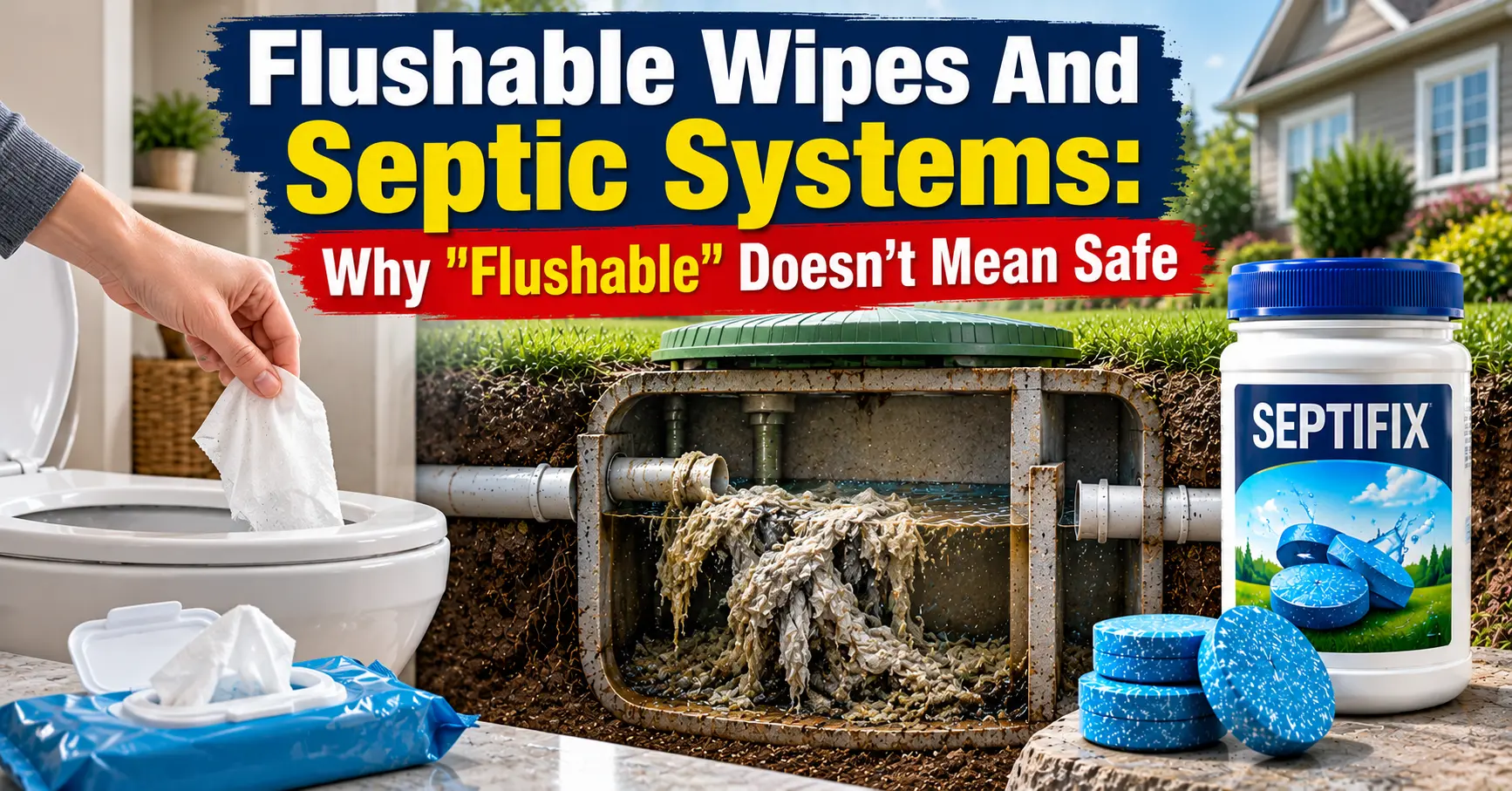
No, "flushable" wipes are not actually safe for septic systems, despite the label. Unlike toilet paper, which is engineered to break apart quickly in water, most wipes marketed as flushable are made with fibers designed to hold together, which is exactly what makes them effective as a wipe in the first place. That same durability means they don't break down in your septic tank the way toilet paper does, and they're one of the most common causes of clogs, backups, and even municipal sewer system blockages reported across the US.
The "Flushable" Label Problem
In the US, there's no strict federal regulation governing what a manufacturer can legally call "flushable." Industry guidelines exist, but they largely test whether a wipe can physically pass through a toilet's plumbing trap, not whether it fully breaks down in a septic tank or sewer system afterward. This is a meaningful gap: a wipe can technically flush successfully out of your toilet bowl and still cause serious problems further down the line, in your home's own pipes, your septic tank, or your local municipal sewer system if you're on city service. Passing through your toilet is a much lower bar than actually breaking down.
Why Toilet Paper Actually Breaks Down And Wipes Don't
Toilet paper sold in the US is specifically engineered to lose its structural integrity quickly once wet, breaking into small fibers within seconds to minutes of contact with water. This is by design, since toilet paper's entire job is to dissolve reliably once it's done its job. Wipes, even ones labeled flushable, are generally made with longer synthetic or blended fibers meant to stay intact while wet, since a wipe that fell apart during use wouldn't work as a wipe. This same durability is the root of the problem: what makes it good at cleaning is exactly what makes it terrible at dissolving in your septic tank.
What Actually Happens Inside Your Septic Tank
Once inside your tank, wipes don't break down the way toilet paper does. Instead, they tend to remain largely intact, accumulating over time and often tangling with hair, grease, and other debris, sometimes forming dense masses in the plumbing industry commonly nicknamed "fatbergs" when this happens at scale in larger sewer systems. In a residential septic tank, this accumulation can contribute to clogged pipes, a blocked effluent filter, covered in our guide on effluent filter clogged, or even physically obstruct the inlet or outlet baffle, interfering with your tank's normal function well before it would otherwise need pumping.
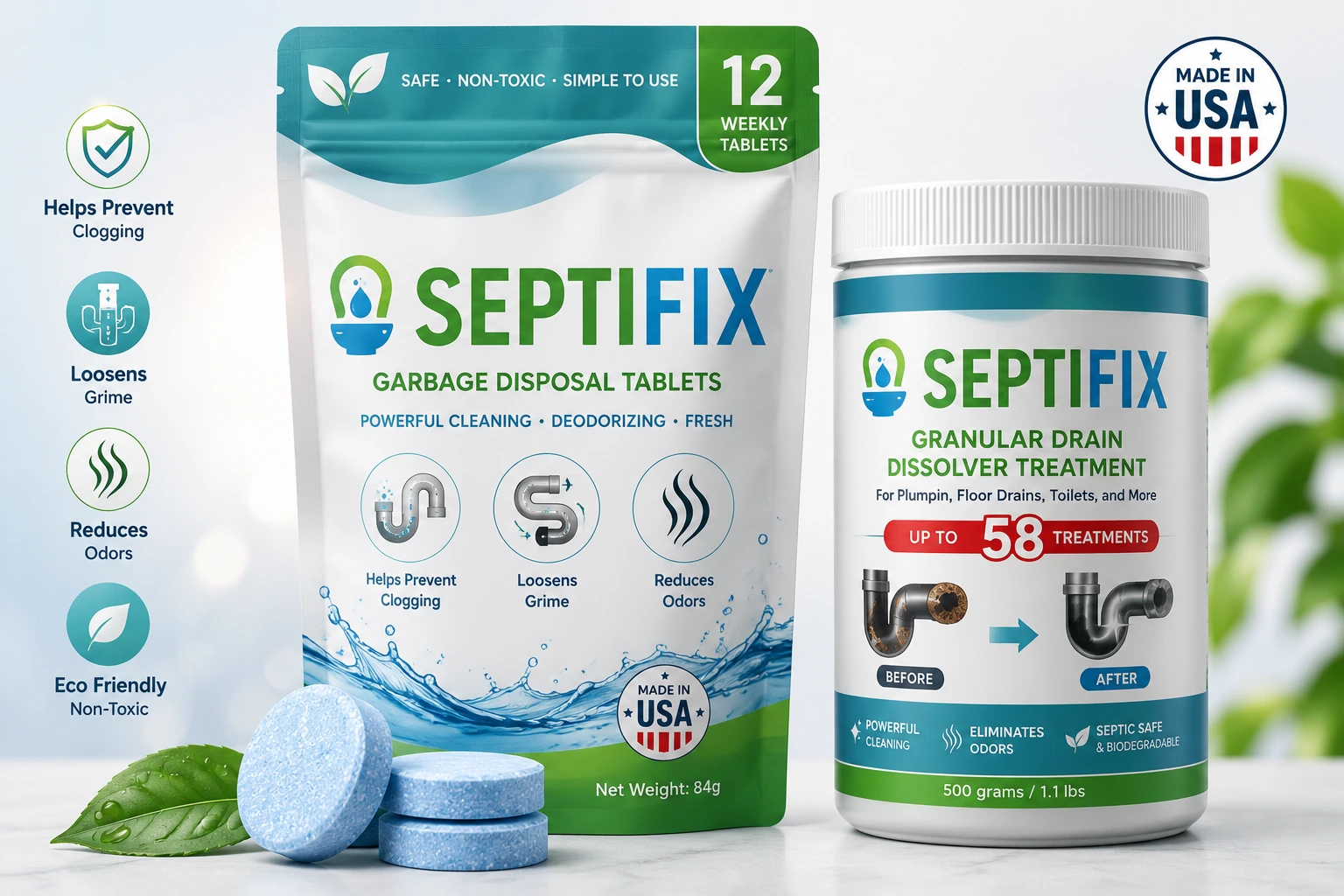
See Current Septifix Pricing
Support your system's bacterial health alongside better flushing habits.
Check Current PriceA Widely Documented Problem Across US Water Utilities
This isn't a fringe concern. Municipal water utilities and wastewater treatment plants across the US have repeatedly and publicly identified wipes, including ones labeled flushable, as a leading cause of sewer line blockages and pump station failures, costing local governments and utility ratepayers significant money in clearing and repair costs every year. Several states and municipalities have taken this seriously enough to consider or pass labeling and disposal regulations specifically targeting wipe manufacturers. If municipal systems, built with far larger pipes and more forgiving capacity than a typical residential septic tank, struggle with this material, it's reasonable to expect an even more direct impact on a home septic system with a fraction of that capacity.
What's Actually Safe To Flush In A US Home
- Standard toilet paper — engineered specifically to break down quickly, the only paper product genuinely designed for septic and sewer systems
- Human waste — what your system is fundamentally designed to process
- Nothing else — as a practical rule for any septic system, if it isn't toilet paper or waste, it belongs in the trash, not the toilet
This includes baby wipes, "adult" cleansing wipes, disinfecting wipes, and makeup remover wipes, all of which are commonly found in American bathrooms and all of which carry the same risk regardless of flushable labeling. Keeping a small, lined trash bin next to the toilet specifically for wipe disposal is a simple, low-cost habit that prevents this issue entirely.
If You've Already Been Flushing Wipes
If you've been flushing wipes regularly and are now concerned about existing accumulation in your tank, the most reliable next step is a professional pumping and inspection, covered in our guide on what happens during a septic tank cleaning, so a technician can directly assess whether wipes have accumulated in your tank or affected your effluent filter. Simply switching habits going forward is a good start, but it doesn't remove material that's already accumulated.
Households Most At Risk
Larger households, covered in our guide on Septifix for large families, and rental properties with multiple occupants and less consistent oversight of household habits, covered in Septifix for landlords, face a higher cumulative risk simply due to volume and less predictable flushing habits across more people using the same system. If you're a landlord, including a brief, clear note in your lease or welcome materials about what shouldn't be flushed is a simple, low-cost way to reduce a genuinely common and preventable cause of emergency plumbing calls.
Frequently Asked Questions
Are any wipes actually safe to flush?
Even wipes labeled "flushable" are not recommended for septic systems, since US industry testing standards for that label don't require the wipe to fully break down in a tank or sewer line, only that it can physically pass through a toilet.
How can I tell if wipes have caused a problem in my septic tank?
Symptoms can include slow drains, gurgling toilets, or a clogged effluent filter. A professional inspection during your next pumping is the most reliable way to confirm whether wipes have accumulated in your tank.
Do flushable wipes cause problems for city sewer systems too, not just septic?
Yes, US municipal water utilities have widely and publicly documented wipes as a major cause of sewer line blockages and pump station failures, even on systems with far more capacity than a home septic tank.
What should I do with used wipes instead of flushing them?
Dispose of them in the regular trash. Keeping a small, lined bin next to the toilet specifically for this purpose makes the habit easy to maintain for every household member.
Final Thoughts
Despite the label, flushable wipes are one of the most common and most preventable causes of septic and sewer problems in American households. The safest rule for any home on a septic system is simple: if it isn't toilet paper or human waste, it goes in the trash, not the toilet. This single habit change, more than almost any product you could buy, protects your system from a genuinely common and avoidable source of costly backups. For the complete picture of good everyday septic habits, see our guide on how to use septic tank treatment correctly and our full Septifix Review 2026.