
Quick Answer
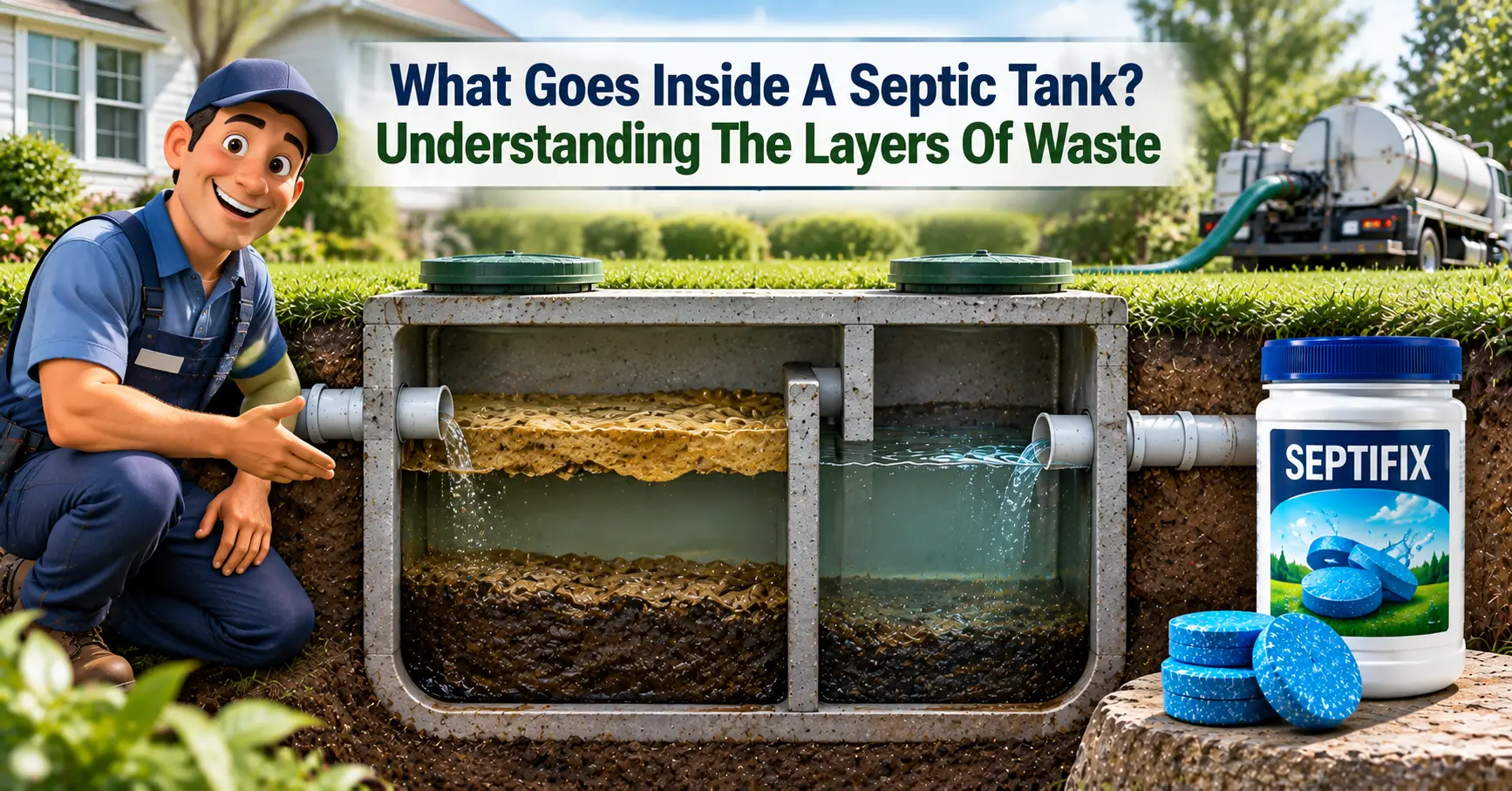
Every septic tank naturally separates its contents into three distinct layers: a scum layer of fats, oils, and lighter solids floating at the top, a layer of relatively clear effluent in the middle, and a sludge layer of heavier solids that settle at the bottom. Bacteria living throughout the tank continuously break down organic material in all three layers, which is the core biological process your entire system depends on.
The Scum Layer
At the top of the tank, fats, oils, greases, and other materials lighter than water float and accumulate, forming what's called the scum layer. This layer builds gradually from normal household waste, cooking grease, soaps, and similar materials, and bacteria continuously work to break it down. We cover this specific layer in more depth, including what causes it to build up excessively, in our guide on septic tank scum layer buildup.
The Effluent Layer
Between the scum layer above and the sludge layer below sits a middle layer of relatively clear liquid, called effluent. This is the portion of the tank's contents that eventually exits toward the drain field, where it continues to be filtered and absorbed by the surrounding soil. Keeping this middle layer as clean as possible, meaning as free of solids as possible, is essentially the entire point of the settling process happening inside the tank, since cleaner effluent means less strain on the drain field.
The Sludge Layer
At the bottom, heavier solid waste settles into the sludge layer. Unlike the effluent above it, sludge doesn't fully break down or exit the tank on its own, it gradually accumulates over months and years. This is the layer that professional pumping is specifically designed to remove, since it's the material that eventually fills the tank's usable capacity if left unaddressed, covered in our guide on signs your septic tank is full.
See Current Septifix Pricing
Support the bacterial process working across all three layers.
Check Current PriceThe Bacteria Doing The Work Throughout
Bacteria are present throughout all three layers, continuously breaking down organic material in the scum, the effluent, and the sludge simultaneously. This is the biological engine of the entire system, and it's why bacterial health is discussed so often in septic maintenance advice generally. When bacterial activity is strong, waste breaks down more efficiently across all three layers. When it's compromised, whether from harsh chemicals, antibacterial products, or a tank that's simply overdue for pumping, all three layers can be affected. We cover the specific mechanics of this process in bacteria vs enzyme septic treatments.
Why Understanding This Actually Matters
A lot of common septic advice makes more sense once you understand this structure. "Don't pour grease down the drain" is about not overloading the scum layer. "Get your tank pumped regularly" is about removing accumulated sludge before it fills the tank's capacity. "Avoid harsh chemicals" is about protecting the bacteria working across all three layers. None of this advice exists in isolation, it all connects back to this same basic three-layer structure and the biological process happening inside it.
Supporting The Process
Since bacterial activity is the common thread running through all three layers, supporting that activity consistently is one of the more directly useful things a homeowner can do. According to the manufacturer, Septifix is designed to support bacteria, enzymes, and aerobic conditions that contribute to breaking down waste across the tank, which connects to the exact process described here. You can read the complete picture in our Septifix Review 2026 and how does Septifix work.
Frequently Asked Questions
Why does a septic tank have layers instead of just being one mixture?
Materials naturally separate by density, lighter fats and oils float, heavier solids sink, and the relatively clear liquid settles in between. This separation is part of how the tank's natural treatment process works.
Does pumping remove all three layers?
Yes, professional pumping removes the scum and sludge layers along with the tank's liquid contents, resetting all three layers to normal levels.
Which layer causes the most problems if ignored?
The sludge layer is generally the most consequential if ignored, since it accumulates over time and directly determines when a tank needs pumping. The scum layer can also cause issues if it builds up excessively from grease.
Do bacteria work equally in all three layers?
Bacterial activity occurs throughout the tank, though conditions can vary somewhat by layer. Overall tank health depends on this activity functioning well across the system generally.
Final Thoughts
A septic tank's three-layer structure, scum, effluent, and sludge, isn't just a technical detail, it's the foundation for understanding almost every piece of septic maintenance advice you'll come across. Bacteria working continuously across all three layers is what keeps the system functioning, which is exactly why supporting that bacterial activity, alongside regular pumping and mindful habits, is such a consistent theme in good septic care.