
Quick Answer
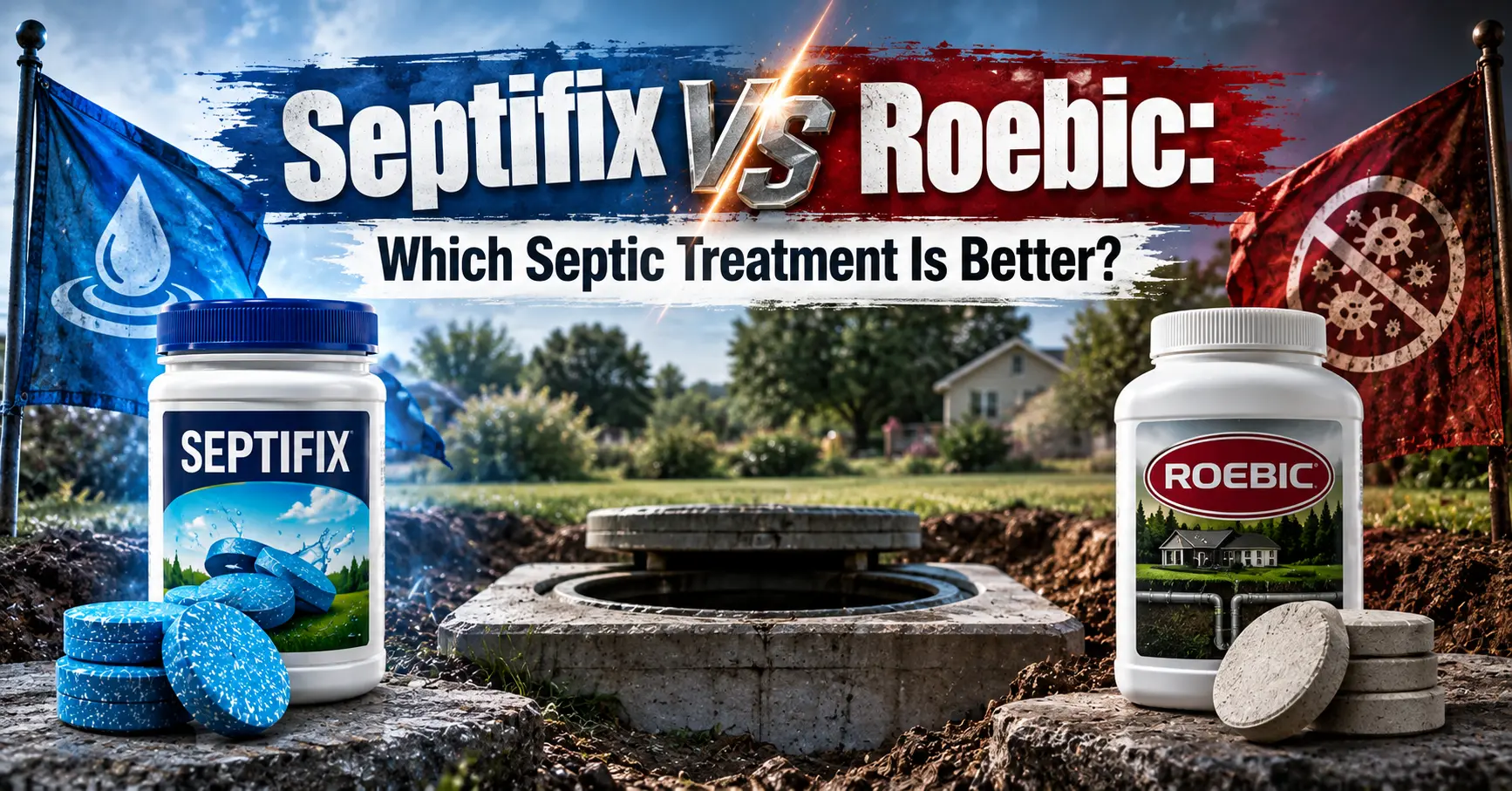
The biggest difference between the two is the type of bacteria and the application model. Roebic's core septic tank treatment, K-37, uses anaerobic, spore-forming bacteria applied once a year in liquid form. Septifix uses aerobic bacteria combined with enzymes and an oxygen-releasing formula, applied monthly as a tablet. Roebic is widely available at retailers like Lowe's and other hardware stores, while Septifix sells primarily through its official website. Neither is a bad choice within its category, the right pick depends on how you'd rather apply treatment and whether the aerobic, oxygen-supported approach appeals to you specifically.
What Are Septifix And Roebic?
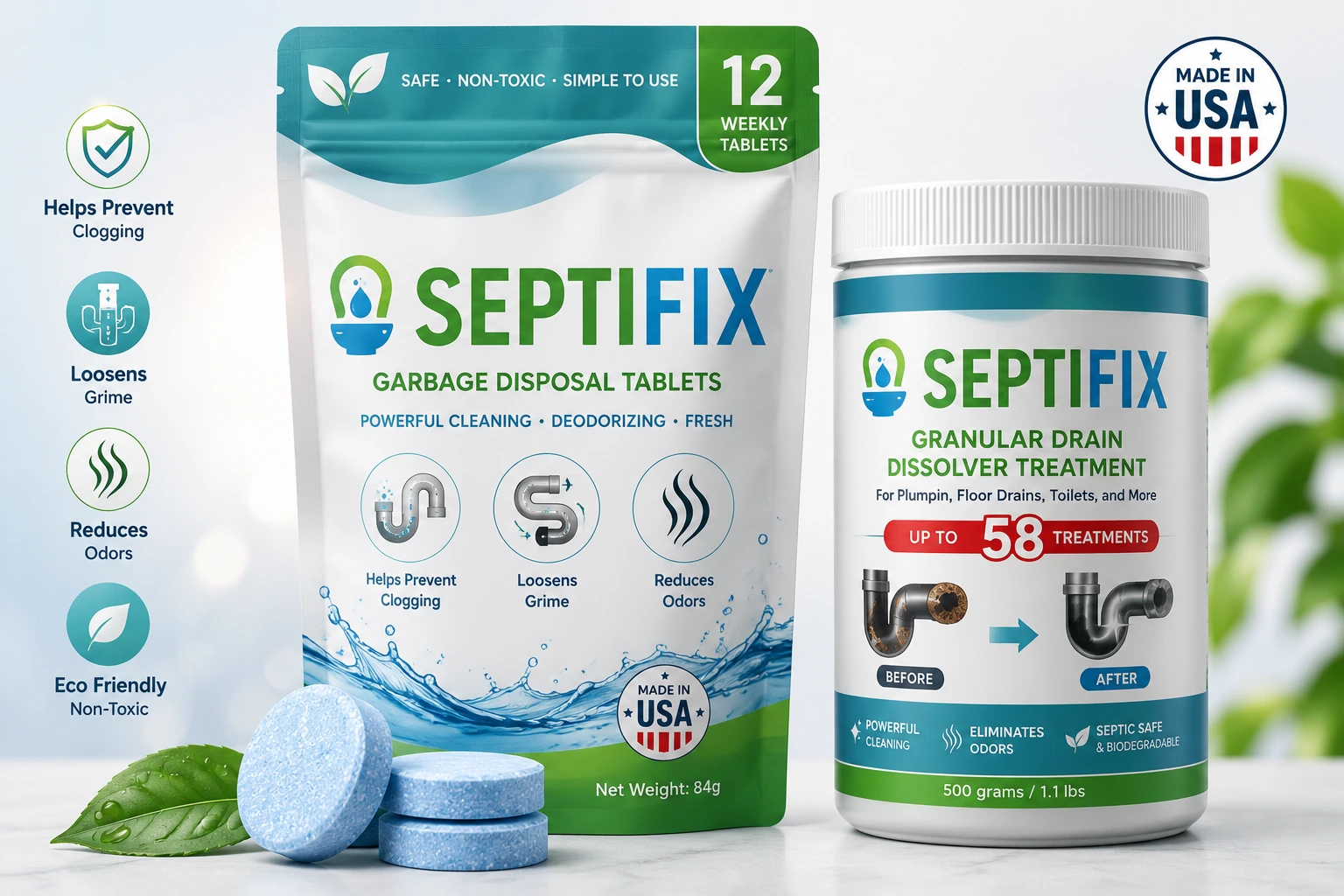
Septifix is a monthly tablet treatment that, according to the manufacturer, combines beneficial aerobic bacteria, enzymes, and an oxygen-releasing formula, sold primarily through its official website. Roebic is a long-established septic and drain care brand with a broad product catalog, its flagship septic tank treatment, K-37, uses anaerobic, spore-bearing bacteria specifically selected and cultured for septic tank conditions, sold in liquid form through major retailers and hardware stores.
Feature Comparison
| Feature | Septifix | Roebic (K-37) |
|---|---|---|
| Bacteria Type | Aerobic | Anaerobic, spore-forming |
| Oxygen-Releasing Component | Yes, per manufacturer | Not mentioned in published formula |
| Format | Tablet | Liquid |
| Application Frequency | Monthly | Once a year, per manufacturer dosing guidance |
| Dosing | One tablet, no measuring | Measured by tank size, roughly one quart per 500 gallons |
| Availability | Official website | Widely available in hardware stores and online |
| Broader Product Line | Focused single product | Extensive line including root killers, drain field treatment, RV products |
Aerobic vs Anaerobic Bacteria
This is the most meaningful technical difference between the two products. Roebic's K-37 formula uses anaerobic, spore-bearing bacteria, organisms that function without oxygen, which is also how the naturally occurring bacteria in an untreated septic tank generally operate. According to its manufacturer, these bacteria are specifically selected to resist soaps and detergents and to continuously produce enzymes that digest protein and keep tank contents liquid. Septifix takes a different approach, aerobic bacteria supported by an oxygen-releasing formula, which is intended to create more favorable conditions for aerobic bacterial activity, a process generally understood to break down organic waste more efficiently than anaerobic activity alone. Neither approach is inherently wrong, they represent two different, established philosophies within septic bacterial treatment. If the oxygen-supported aerobic approach is something you specifically want, that's a real differentiator in Septifix's favor. If you're comfortable with a more traditional anaerobic formula from an established brand, Roebic's approach has decades of use behind it. We cover the underlying science in more depth in our guide on bacteria vs enzyme septic treatments.
See Current Septifix Pricing
An aerobic bacteria, enzyme, and oxygen-releasing tablet formula.
Check Current PriceAnnual Liquid vs Monthly Tablet
The application models are genuinely different enough to matter for how each fits into your routine. Roebic's K-37 is designed as a once-a-year treatment, measured liquid poured according to your tank's capacity, roughly one quart per 500 gallons based on the manufacturer's guidance. This means less frequent action required, but it also means precision matters more at each application, and missing that single yearly window means going a full year without any renewed treatment. Septifix's tablet format, by contrast, is designed for monthly use with no measuring at all, just flush one tablet. This is a more frequent commitment, but each individual step is simpler, and a single missed month has a smaller impact than missing your one yearly application entirely. Which model fits better really comes down to whether you'd rather handle something once and not think about it for a year, or build a simple monthly habit. See our guide on how often should you use Septifix for more on that specific routine.
Roebic's Broader Product Line
One area where Roebic clearly differs from Septifix is breadth. Roebic sells an extensive line of septic and drain-related products beyond its core tank treatment, including dedicated drain field treatments, root killer products, main line cleaners, and specialized bacteria formulated for RV and marine holding tanks. If you're looking for a single brand to cover multiple needs, a septic tank treatment, a separate drain field product, and something for an RV, Roebic's catalog offers that breadth in one place. Septifix, by contrast, is a more narrowly focused single product built specifically for the residential septic tank use case, which we've written about directly in is Septifix safe for RV septic systems, where we're upfront that Septifix isn't designed as an RV holding tank product the way some of Roebic's dedicated line is.
Where Each Is Sold
Roebic is broadly available through home improvement retailers like Lowe's, hardware stores, and online marketplaces, making it easy to buy in person if that matters to you. Septifix is sold primarily through its official website, a direct-to-consumer model that ties pricing, guarantee terms, and support directly to that single checkout. We cover this general tradeoff, buying in person versus buying direct, in more detail in our guide on where to buy Septifix.
Which One Should You Choose?
Roebic may be the better fit if you:
- Prefer a once-a-year application rather than a monthly routine
- Want to buy from a hardware store or retailer you already shop at
- Are interested in a single brand that also covers root treatment, drain field care, or RV holding tanks
- Are comfortable with a traditional anaerobic bacteria formula
Septifix may be the better fit if you:
- Want the aerobic bacteria and oxygen-releasing approach specifically
- Prefer a simple, no-measuring monthly tablet over a measured annual liquid dose
- Want to buy directly through an official checkout with a stated guarantee, covered in Septifix money back guarantee
- Prefer a habit-forming monthly routine over remembering a single yearly application
For a deeper look at Septifix specifically, see our complete Septifix Review 2026.
What Neither Product Does
Regardless of which bacterial treatment you choose, it's worth being clear that neither Septifix nor Roebic's K-37 replaces professional pumping, and neither repairs a structurally damaged tank or a failed drain field. Both are maintenance products designed to support the biological waste-breakdown process in a properly functioning system, not physical repair solutions. This distinction matters more than the specific brand choice, and we cover it directly in does septic tank treatment replace pumping.
Cost Considerations Over A Full Year
Because the two products use such different application schedules, comparing sticker price alone doesn't tell the full story. Roebic's K-37 is purchased as a single annual bottle, sized to your tank's capacity, so the yearly cost is essentially one purchase. Septifix is purchased as a recurring monthly tablet, meaning your total annual spend is the price of twelve tablets rather than one bottle. Neither structure is inherently cheaper, it depends on the specific pricing at the time you buy, which changes for both brands over time and across different bundle sizes. What's worth comparing isn't the price of a single unit, but the total cost across a full year of use for each product, since that's the number that actually reflects what you'd spend maintaining your system with either option. We cover Septifix's specific value proposition in more depth in is Septifix worth the price and is buying Septifix in bulk worth it, both worth reading before comparing final numbers against Roebic's current retail pricing.
Which Scenario Fits Which Product
Beyond the general pros and cons, a few specific homeowner situations tend to point more clearly toward one product or the other. A landlord managing several rental properties, for example, may prefer Septifix's simple, no-measuring monthly tablet specifically because it's easier to standardize across multiple units and hand off to a property manager without training, a consideration we cover in Septifix for landlords. A homeowner who already runs errands to a hardware store regularly and prefers a "set it and forget it for a year" approach may lean toward Roebic simply for the reduced frequency of action required, even though it involves a single more precise measuring step. Someone managing a vacation or seasonal property with irregular occupancy might actually find the monthly tablet format easier to keep consistent even when the home sits vacant for stretches, a scenario we cover in best septic treatment for vacation homes, since a caretaker can be handed a simple recurring task rather than needing to remember a once-a-year event that might fall during a period nobody is checking on the property.
Frequently Asked Questions
Is Roebic as effective as Septifix?
Both are established, legitimate bacteria-based treatments, just with different bacteria types and application models. We haven't independently lab-tested either product, so we can't make a definitive effectiveness ranking, but Septifix's aerobic-plus-oxygen approach and Roebic's anaerobic spore-forming approach represent two different, established methods within the category.
Can I buy Roebic at a hardware store?
Yes, Roebic products are widely available at retailers including Lowe's and other hardware and home improvement stores, based on current retail listings.
Does Roebic work for RV tanks?
Roebic sells dedicated products formulated specifically for RV and marine holding tanks, separate from its residential septic tank treatment. Septifix is not marketed for this use case, covered in is Septifix safe for RV septic systems.
Which is easier to use, Septifix or Roebic?
Septifix's tablet requires no measuring, just a monthly flush. Roebic's liquid requires measuring based on tank size but only needs to be applied once a year, so "easier" depends on whether you'd rather avoid measuring or avoid frequent application.
Final Thoughts
Septifix and Roebic represent two legitimate, established approaches to septic tank bacterial treatment, aerobic and oxygen-supported versus anaerobic and spore-forming, monthly tablet versus annual measured liquid. Neither is objectively superior across the board, the right choice depends on which application rhythm fits your routine, whether the oxygen-releasing formula appeals to you specifically, and whether you'd rather buy in person or direct from an official checkout.