
Quick Answer
Tank material doesn't meaningfully affect how a bacteria-and-enzyme treatment like Septifix works, since the biological process the tablet supports happens within the liquid and solid waste inside the tank, not through any interaction with the tank walls themselves. This holds true across concrete, plastic, and fiberglass tanks. Where material does matter is for structural durability, installation cost, and how a tank ages over time, which are separate considerations from treatment compatibility.
Why This Question Comes Up
Homeowners reasonably wonder whether a treatment product interacts differently with different tank materials, especially if they've read about certain chemical products reacting poorly with specific materials in other contexts, like certain drain cleaners and older plumbing. It's a sensible question to ask before introducing anything new into your system, and the good news is that this particular concern doesn't really apply to bacteria-and-enzyme treatments the way it might to some harsher chemical products.
Concrete Septic Tanks
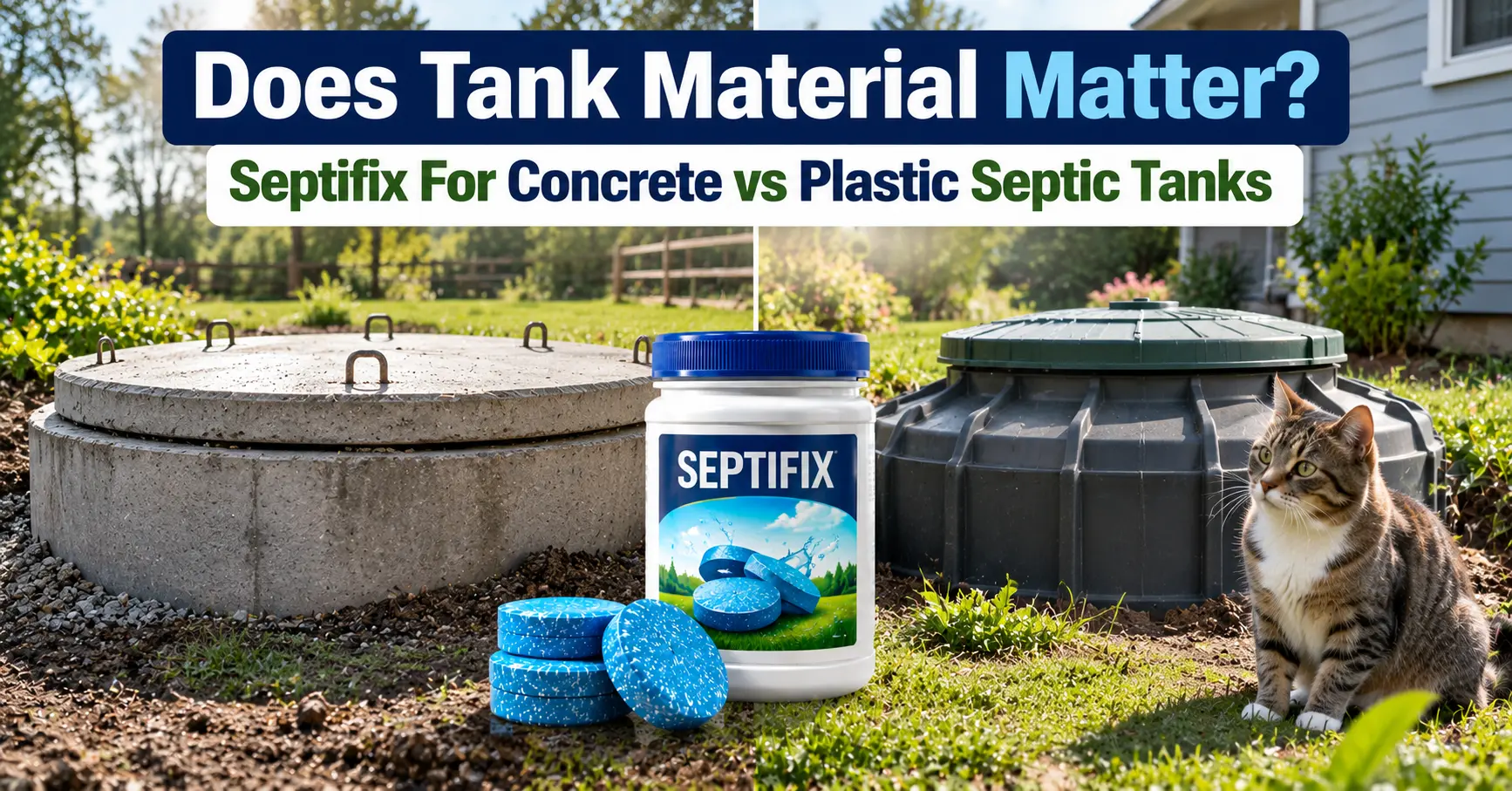
Concrete has historically been the most common septic tank material in the US, particularly for older installations, and remains widely used today. Concrete tanks are valued for their durability and weight, which helps keep them stable in the ground, though they can be susceptible to cracking over time, particularly from ground shifting, tree root pressure, or age-related deterioration in tanks that are several decades old. Concrete tanks are also more prone to a specific form of interior wear called corrosion, caused by naturally occurring gases produced during waste breakdown reacting with the concrete surface above the waterline over many years. This is a slow, long-term structural consideration, not something related to using a bacteria-and-enzyme treatment product.
Plastic Septic Tanks
Plastic tanks, typically made from polyethylene, have become increasingly common in newer installations, particularly valued for being lightweight, which makes installation easier, and resistant to the corrosion concrete tanks can experience over time. Plastic tanks are generally not susceptible to cracking from the same corrosive gas exposure that affects concrete, though they can be vulnerable to structural stress if improperly installed or if the surrounding soil isn't properly compacted, since the tank itself doesn't have concrete's inherent weight and rigidity.
Fiberglass Septic Tanks
Fiberglass tanks share some characteristics with plastic, lightweight and resistant to the corrosion that affects concrete, and are also a fairly common choice in newer installations. Like plastic tanks, proper installation and soil support matter more for fiberglass tanks than for the inherently heavier concrete alternative.
See Current Septifix Pricing
Works the same way regardless of your tank's material.
Check Current PriceWhy Treatment Works The Same Across Materials
The reason tank material doesn't affect how Septifix, or any bacteria-and-enzyme treatment, performs comes down to where the actual biological activity happens. The tablet dissolves and releases bacteria, enzymes, and oxygen-supporting compounds into the liquid and solid waste inside the tank, and this process occurs within that waste mixture itself, not through any chemical interaction with the tank's interior walls. Whether those walls are concrete, plastic, or fiberglass is essentially irrelevant to a process that's happening in the tank's contents, not its structure. This is a meaningfully different situation than, say, a caustic chemical product that could theoretically interact with certain pipe materials or tank linings over repeated heavy use. We cover the general mechanism behind this process in more detail in how does Septifix work.
Where Tank Material Actually Does Matter
- Structural longevity: concrete tanks can experience corrosion-related wear over many decades, while plastic and fiberglass are more resistant to that specific issue but depend more heavily on correct installation
- Installation and replacement cost: material affects upfront cost and installation complexity, a separate consideration from ongoing maintenance
- Professional inspection considerations: a technician may check for different specific wear patterns depending on your tank's material during a routine service, covered in what to expect during a septic tank inspection
- Overall system lifespan: material is one of several factors, alongside maintenance habits and soil conditions, that influence how long a system lasts overall, covered in how long does a septic system last
How To Find Out What Your Tank Is Made Of
If you're not sure what your tank is made of, a few reliable ways to find out include checking your property's septic permit or installation records, typically available through your local health department or county records office, asking your septic service provider directly the next time they visit, since a professional can usually identify tank material quickly during a routine pumping or inspection, or, for newer homes, checking any documentation provided at the time of purchase or construction. None of this is urgent information you need before using a treatment product, since as established, material doesn't affect treatment performance, but it's genuinely useful to know for general maintenance planning and if you ever need to discuss your system with a professional.
A Few Material-Specific Maintenance Notes
While treatment compatibility is universal, there are a couple of minor, material-related maintenance notes worth knowing. Owners of older concrete tanks may want to ask their service provider specifically about corrosion during routine inspections, since this is a concrete-specific, age-related concern worth monitoring over the decades. Owners of plastic or fiberglass tanks should be mindful about heavy vehicles or equipment driving directly over the tank area, since these materials, while resistant to corrosion, can be more susceptible to structural stress from surface weight than concrete's inherent mass provides. Neither of these considerations changes anything about your monthly treatment routine, they're simply useful context for the kind of questions worth raising with a professional during your regular service visits.
New Installations vs Older Existing Systems
If you're planning a new septic installation, tank material becomes a genuinely relevant decision involving cost, expected lifespan, local soil conditions, and installer recommendations specific to your property, and that decision is best made with a licensed septic professional who understands your local regulations and site conditions, not from a general article like this one. If you're simply a homeowner with an existing system, whatever material it happens to be, the practical takeaway is much simpler: your maintenance routine, including which treatment product you use, doesn't need to change based on what material your tank already is. This distinction matters because a lot of tank material discussion online is aimed at people planning new installations, which can create the impression that material is a more urgent day-to-day consideration for existing homeowners than it actually is. For someone who already has a functioning system, understanding your tank's material is genuinely useful background knowledge, worth knowing for context and for conversations with your service provider, but it isn't something that should change how you approach routine bacterial maintenance.
What This Actually Means For Your Routine
Bringing this back to the practical, everyday question most homeowners actually have: if you're wondering whether you need to choose a different treatment product, adjust your dosing, or handle your monthly routine any differently based on whether your tank is concrete, plastic, or fiberglass, the straightforward answer is simply no. Follow the same directed monthly routine, covered in how often should you use Septifix, regardless of your tank's construction. The consistency of your routine, and the general condition of your system through regular pumping and mindful household habits, matters far more to your system's long-term health than which material happens to make up your tank's walls.
Frequently Asked Questions
Does Septifix work differently in a concrete tank versus a plastic tank?
No, the treatment process happens within the tank's liquid and solid waste contents, not through interaction with the tank walls, so performance is expected to be the same regardless of material.
Is one tank material better than another overall?
Each has tradeoffs. Concrete is heavy and durable but can experience corrosion over many decades. Plastic and fiberglass resist that corrosion but rely more heavily on correct installation and soil support.
How do I find out what material my septic tank is made of?
Check your property's septic permit records, ask your service provider during your next visit, or review any documentation from when your home was built or the system was installed.
Does an older concrete tank need a different maintenance approach?
Your monthly treatment routine stays the same regardless of material. It's worth asking your service provider to check for age-related corrosion specifically during routine inspections of an older concrete tank.
Should tank material influence which treatment brand I choose?
No, this shouldn't be a deciding factor. Since bacteria-and-enzyme treatments work within the tank's waste contents rather than interacting with the tank walls, material compatibility isn't a meaningful differentiator between competing products, and other factors like application format and cost are more relevant to that decision, covered in our various product comparison guides.
Final Thoughts
Whether your septic tank is concrete, plastic, or fiberglass, a bacteria-and-enzyme treatment like Septifix works the same way, since the biological process happens within the tank's contents rather than through any interaction with the tank material itself. Where material genuinely matters is structural longevity, installation considerations, and what a professional might specifically check for during an inspection, all separate questions from which treatment product is right for your system. For the complete picture of the product itself, see our full Septifix Review 2026.