
Quick Answer
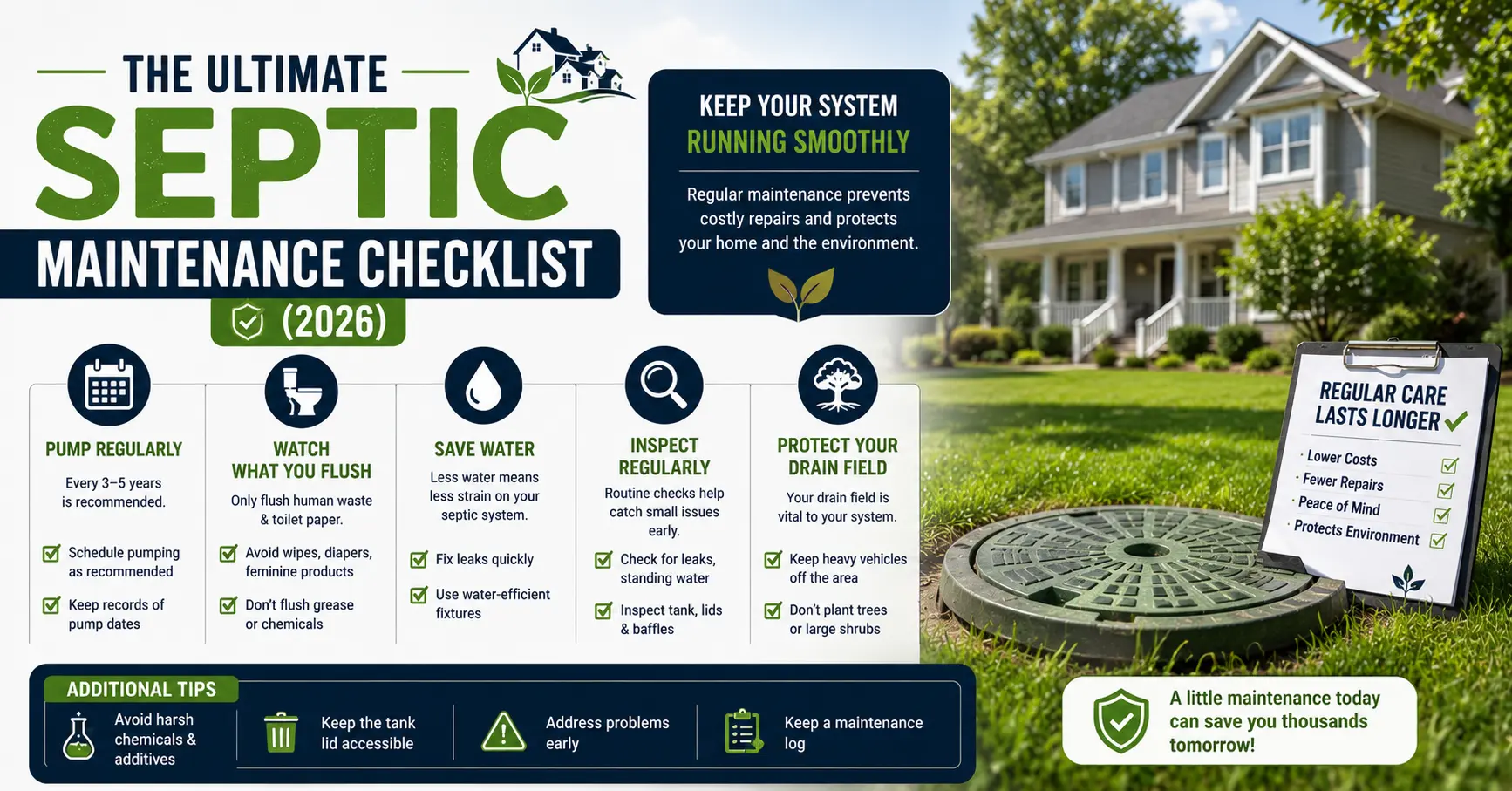
The best septic system maintenance checklist covers four essentials: professional inspections, timely tank pumping, responsible water use, and proper drain field care. A few simple habits can help you spot problems early and keep your household septic system operating as intended.
Quick Septic Tank Maintenance Checklist
Save this list and use it as a starting point for your household routine.
- Every month: Check for unusual plumbing changes, leaks, or recurring slow drains.
- Every month: Spread out heavy water use, such as laundry and long showers.
- Every month: Keep grease, wipes, chemicals, and other unsuitable waste out of drains.
- Every 3–5 years, as a general guide: Arrange septic tank pumping when indicated by the system's condition and service professional.
- At least every 3 years, as a general guide: Arrange a professional septic system inspection (more often for systems with pumps or mechanical parts).
- Every few months: Look for standing water, sewage odors, or unusual changes around the tank and drain field.
- After major yard work or landscaping: Check that the septic tank and drain field remain protected.
- After every service visit: Record the inspection findings, pumping date, repairs, and recommended next service.
These are general starting points. Your septic system design, tank size, household size, water usage, local requirements, and professional recommendations may call for a different schedule.
1. How Often Should You Maintain a Septic System?
Different maintenance tasks have different schedules. A quick visual check does not replace a professional inspection, and an inspection does not automatically mean the tank needs pumping.
| Maintenance task | General frequency | What to do |
|---|---|---|
| Check plumbing and water use | Monthly | Look for leaks, unusual slow drains, and excessive water use |
| Check the yard and drain field | Every few months and after heavy rain | Look for standing water, persistent wet areas, or sewage odors |
| Professional system inspection | At least every 3 years | Have a qualified septic professional assess the system |
| Septic tank pumping | Often every 3–5 years | Follow the inspection findings and pumping recommendations |
| Inspect mechanical components | As specified for the system | Follow the manufacturer's and service professional's schedule |
| Update maintenance records | After every service visit | Record work completed and the next recommended service date |
The U.S. Environmental Protection Agency says an average household septic system should be inspected at least every three years by a septic service professional, and that household tanks are typically pumped every three to five years. Alternative systems with electrical float switches, pumps, or mechanical components should generally be inspected about once a year. See the EPA's guidance on caring for your septic system.
For more detail, read our guide: How Often Should You Pump a Septic Tank?
2. Monthly Septic System Maintenance Checklist
Monthly maintenance is mainly about preventing avoidable stress on the system and noticing changes early.
Use water efficiently
- Fix leaking faucets and running toilets.
- Spread laundry loads throughout the week instead of doing many loads in one day.
- Avoid running several water-intensive appliances at the same time when possible.
- Investigate unexplained increases in water use.
Excess water can overload a septic system and interfere with the drain field's ability to absorb wastewater.
Dispose of waste correctly
- Flush human waste and toilet paper only, unless your system's instructions or local guidance specify otherwise.
- Put wipes, paper towels, diapers, dental floss, and hygiene products in the trash.
- Keep cooking grease, fats, and oils out of kitchen drains.
- Never pour paint, solvents, pesticides, or other hazardous chemicals into household drains.
Products labelled “flushable” may still cause plumbing or septic-system problems.
Check for changes inside the house
Pay attention to recurring slow drains, gurgling, sewage odors, or wastewater backing up. A single slow drain may have a local plumbing cause, but problems affecting several fixtures deserve prompt investigation.
Do not open a septic tank to investigate problems yourself. Septic tanks can contain dangerous gases and other hazards.
3. Quarterly Septic Tank and Drain Field Checklist
A few minutes of observation around the property can help you notice potential problems before they become more serious.
Walk around the visible parts of the septic system and check for:
- Standing water or persistently soggy ground near the tank or drain field.
- Sewage odors around the system.
- Unusually lush or spongy grass over the drain field, especially during dry weather.
- Visible damage, sinking ground, or signs of erosion.
- Water flowing toward the drain field from roof gutters or other drainage systems.
These observations do not confirm a septic system failure on their own. Rainfall, soil conditions, and other drainage problems can produce similar signs. Contact a septic professional if you notice persistent or unexplained changes.
Important: Never walk over an exposed, damaged, or unstable tank cover. Keep children and pets away from unsafe areas.
4. Annual Septic System Records and Planning
An annual review helps you keep track of your system even when no obvious problems are present.
Complete these tasks once a year:
- Locate your septic system plan, installation records, or permit documents.
- Check the date and findings of your last professional inspection.
- Review the last pumping date and the service provider's recommendations.
- Confirm that you know where the tank and drain field are located.
- Review any changes in household size or water use.
- Check whether your system has pumps, alarms, filters, or other components that need scheduled maintenance.
- Confirm the next recommended inspection or service date.
Do not assume that a system is healthy just because the drains work normally. Many important components are underground. Professional inspection is needed to assess their condition.
5. Septic Tank Pumping and Professional Inspection
Pumping removes accumulated solids from the septic tank. Inspection helps determine the condition of the tank and other system components and whether service is needed.
For many conventional household septic systems, the EPA gives a general guideline of inspection at least every three years and pumping approximately every three to five years. Actual timing varies with tank size, household size, wastewater volume, and solids accumulation.
During a professional service visit, ask the provider to:
- Check for leaks and visible damage.
- Assess accumulated sludge and scum.
- Inspect accessible tank components and filters where applicable.
- Check the condition of the outlet and other relevant components.
- Evaluate the drain field if indicated.
- Explain any recommended repairs or additional maintenance.
- Record the work completed and when the next service should be considered.
Do not postpone recommended pumping simply because the system has no obvious odor or backup. Conversely, do not assume every tank must be pumped on exactly the same schedule. Use the system's condition and professional findings to guide the decision.
For the detailed schedule and factors that affect pumping, see our septic tank pumping frequency guide.
6. How to Protect Your Septic Drain Field
The drain field is the area where wastewater leaving the septic tank receives further treatment in the soil. Protecting it is a core part of septic system maintenance.
Follow these rules:
- Keep vehicles and heavy equipment off the drain field.
- Do not build patios, sheds, driveways, or other structures over the system.
- Avoid planting trees or deep-rooted shrubs close to septic components.
- Keep roof runoff, sump-pump discharge, and surface water away from the drain field.
- Avoid directing excess water from sprinklers or drainage systems onto the area.
- Maintain the surface as recommended for your particular system, commonly with grass cover.
- Do not dig or make landscaping changes until the tank and drain field locations are confirmed.
Saturated soil can reduce the drain field's ability to absorb wastewater. Heavy loads and roots can also damage system components.
If the ground above your drain field stays wet or sewage odors persist, arrange a professional assessment rather than trying to fix the area with additional soil or landscaping.
7. Septic Maintenance Mistakes to Avoid
A good septic tank maintenance checklist includes knowing what not to do.
Avoid these common mistakes:
- Ignoring pumping recommendations. Solids can accumulate and eventually affect downstream components.
- Flushing wipes and household rubbish. These materials may block plumbing or build up in the tank.
- Sending grease down the drain. Grease can accumulate and contribute to blockages.
- Overloading the system with water. Excessive water use can stress the tank and drain field.
- Using the toilet or sink to dispose of chemicals. Hazardous substances may harm the system or contaminate the environment.
- Parking on the drain field. Heavy loads can compact soil or damage buried components.
- Skipping professional inspections. Underground damage may not be obvious from the surface.
- Treating additives as a replacement for maintenance. No treatment product should be assumed to replace necessary inspection, pumping, or repairs.
- Opening the tank without proper training. Septic tanks present serious safety hazards.
8. What Are the Warning Signs of a Septic System Problem?
Contact a qualified septic professional if you notice:
- Sewage backing up into sinks, showers, or toilets.
- Several fixtures draining slowly or gurgling.
- Persistent sewage odors indoors or outside near the system.
- Standing wastewater or persistently wet ground near the tank or drain field.
- Unusually lush, spongy grass over the drain field during otherwise dry conditions.
These signs can have more than one cause. A professional can help determine whether the issue involves the plumbing, tank, drain field, or another part of the system.
If you notice these symptoms, use our detailed guide to signs your septic tank is full.
If sewage is backing up into the home, avoid contact with it and arrange prompt professional assistance.
9. Are Septic Tank Treatment Products Necessary?
Some homeowners consider septic tank treatments as an addition to their maintenance routine. However, a treatment product is optional and should not replace the essential maintenance tasks in this checklist.
The most important steps remain:
- Follow the recommended inspection and pumping schedule.
- Use water efficiently.
- Dispose of waste properly.
- Protect the drain field.
- Address warning signs promptly.
The EPA does not generally recommend routine bacterial or chemical additives for domestic septic systems (see its septic tank additives fact sheet). Whether a particular product is appropriate depends on the product's claims, your system, and professional advice.
If you are considering a treatment product, read our complete Septifix review for product-specific information before deciding.
10. Printable Septic System Maintenance Log
Use this simple log to keep your household's septic maintenance history in one place. Record actual dates and recommendations instead of relying on memory.
| Task | Date completed | Findings or notes | Next recommended date |
|---|---|---|---|
| Professional inspection | |||
| Septic tank pumping | |||
| Filter or component service | |||
| Drain field assessment | |||
| Repairs completed | |||
| Other maintenance |
Keep receipts, inspection reports, tank-pumping records, and repair invoices with this log. These records can help you plan future maintenance and provide useful information if you sell your home.
Frequently Asked Questions
What should be included in a septic system maintenance checklist?
Include regular observation of plumbing and the drain field, responsible water use, correct waste disposal, professional inspections, tank pumping when needed, and a record of all service visits. Systems with mechanical components may need additional scheduled maintenance.
How often should a septic tank be maintained?
Check household habits and visible signs regularly. The EPA says an average household system should be inspected at least every three years and that household tanks are typically pumped every three to five years. Your actual schedule depends on the system's design, tank size, household use, and inspection findings.
What is the most important septic tank maintenance task?
There is no single task that replaces the others. Timely pumping, professional inspections, efficient water use, proper waste disposal, and drain field protection all play important roles in routine maintenance.
Can I maintain my septic system myself?
You can manage everyday habits, check the visible surroundings, conserve water, and maintain service records. A qualified professional should handle tank inspections, pumping, and technical assessments. Never enter a septic tank.
Do septic tank additives replace pumping?
No. Do not rely on additives to replace pumping or professional inspection. Follow the system's maintenance requirements and the recommendations of a qualified septic professional.
How do I know when my septic tank needs pumping?
The timing depends on tank capacity, household size, water use, and the amount of solids accumulated. A septic professional can inspect the tank and recommend when pumping is needed. Read our guide to how often to pump a septic tank.
Can heavy rain affect a septic system?
Yes. Saturated soil can limit the drain field's ability to absorb wastewater. Keep surface water and roof runoff directed away from the system, and contact a professional if standing water or sewage symptoms persist.
Should I use bleach or household cleaners with a septic system?
Use household products according to their labels and avoid sending large amounts of harsh chemicals or hazardous substances down the drain. Normal household cleaning practices are different from disposing of concentrated chemicals, solvents, or other hazardous waste through the septic system.
Final Checklist: Keep Your Septic System on Schedule
Good septic system maintenance comes down to consistent habits, timely professional service, and attention to changes around your home.
Remember the essentials:
- Use water efficiently.
- Flush only appropriate materials.
- Keep grease and hazardous chemicals out of drains.
- Protect the tank and drain field from damage.
- Schedule inspections and pumping according to your system's needs.
- Keep accurate maintenance records.
- Get professional help when warning signs appear.
Save this septic tank maintenance checklist and review it throughout the year. A clear routine makes it easier to remember what you have done, what needs attention, and when to arrange your next service.