
Quick Answer
Laundry affects your septic system in two main ways: the sheer volume of water entering the tank with each load, and the type of detergent and additives going in with that water. Spacing out laundry loads rather than running several back to back, and choosing a septic-safe, low-sudsing detergent without excessive fillers, are the two most impactful habits for minimizing strain on your system.
The Water Volume Issue
A single load of laundry can use a significant amount of water, and all of that water enters your septic tank at once, alongside the wastewater from every other fixture in your home. On its own, this is manageable for a properly sized system. The issue arises when laundry is combined with other heavy water use in a short window, several loads back to back, or laundry running at the same time as dishwashing and showers, since this concentrated volume can temporarily overwhelm the tank's capacity to properly settle solids before sending effluent to the drain field.
Detergent Choice Matters
Not all laundry detergents are equal from a septic perspective. Look for detergents labeled as septic-safe or biodegradable, which are generally formulated to break down more readily and produce less lasting residue than heavier conventional formulas. Liquid detergents are also generally considered gentler on septic systems than powder detergents, since some powder formulas contain fillers that don't fully dissolve and can contribute to sludge buildup over time.
What To Avoid In Laundry Products
- High-sudsing detergents, which can contribute to foaming issues, covered in septic tank foaming
- Excessive use of bleach or strong antibacterial laundry additives, which can suppress the bacteria your tank depends on
- Fabric softener sheets or liquid softeners in heavy excess, which contain waxy compounds that don't break down easily
- Powder detergents with heavy filler content, which can contribute to solids accumulation
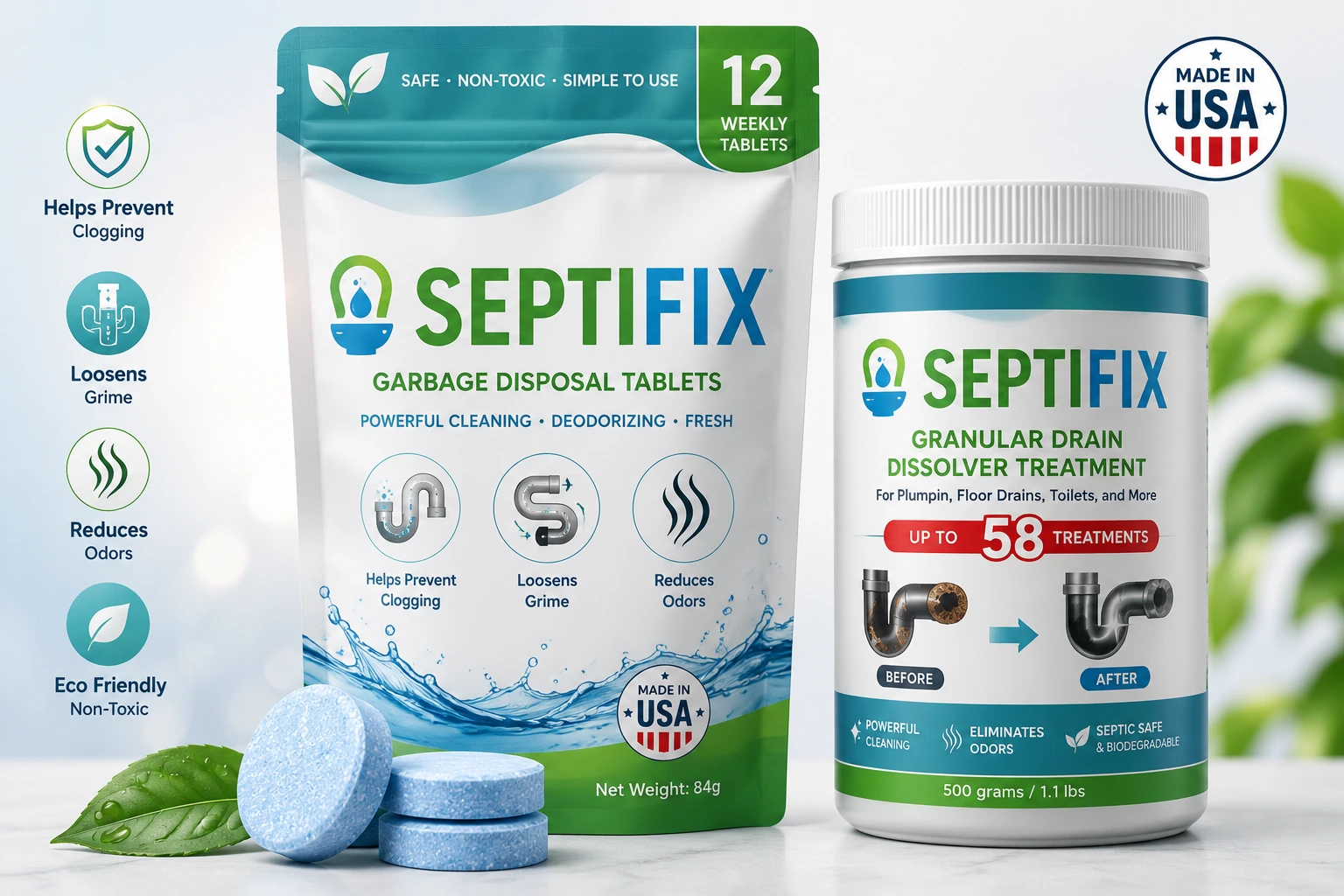
See Current Septifix Pricing
Support bacterial health that helps process laundry wastewater efficiently.
Check Current PriceTiming And Spacing Your Loads
- Spread laundry loads across the week rather than doing them all in a single day
- Avoid running the washing machine at the same time as the dishwasher or during a period of otherwise heavy household water use
- For larger households, covered in our guide on Septifix for large families, spacing matters even more given the higher overall water volume already moving through the system
Lint And Synthetic Fibers
Washing machines release lint and small synthetic fibers into wastewater with every load, and over time this can contribute to the material collecting in your tank's scum layer or, in some cases, affecting an effluent filter if your system has one. A washing machine lint filter, or an inline lint trap installed on the discharge line, is a low-cost way to catch some of this material before it enters the septic system at all, something worth discussing with a plumber if you're not sure your setup has one.
Supporting Bacterial Health Alongside Good Habits
Good laundry habits reduce strain on your system, but they work best alongside consistent bacterial support, since laundry wastewater still needs to be processed by the same bacterial activity responsible for breaking down everything else entering your tank. According to the manufacturer, a monthly treatment like Septifix is designed to support that bacterial process, helping your system keep pace with routine household demands, laundry included. You can read the complete picture in our Septifix Review 2026.
Frequently Asked Questions
Is powder or liquid detergent better for septic systems?
Liquid detergent is generally considered gentler on septic systems, since some powder formulas contain fillers that don't fully dissolve and can contribute to solids accumulation over time.
How many loads of laundry per day are too many for a septic system?
There's no universal number, since it depends on your tank size and household's overall water use. Spacing loads throughout the week rather than concentrating them in a single day is a reasonable general habit.
Does fabric softener harm a septic system?
Occasional, moderate use isn't generally considered a major concern, but heavy or excessive use of waxy fabric softeners can contribute to residue buildup over time.
Should I install a lint filter for my septic system?
An inline lint trap on your washing machine's discharge line is a reasonable, low-cost addition that can help reduce the amount of lint and synthetic fiber entering your septic system.
Final Thoughts
Laundry is a bigger factor in septic health than most homeowners initially realize, both through sheer water volume and the specific products used. Choosing a septic-safe detergent, spacing out your loads, and being mindful of fabric softener and bleach use are all simple, low-effort habits that reduce strain on your system, and they work best alongside a consistent bacterial maintenance routine that helps process everything laundry sends downstream.