
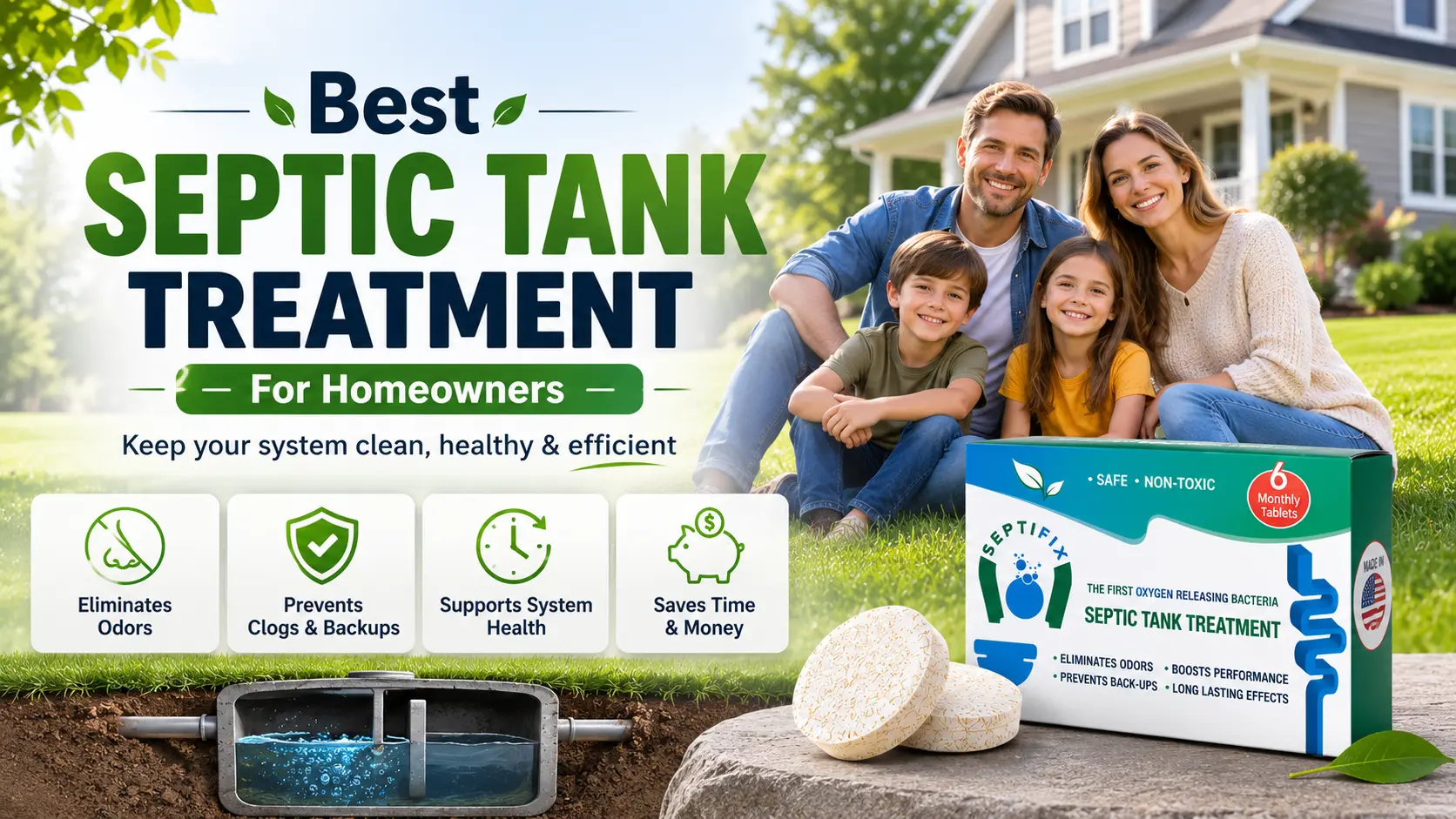
Quick Answer: What Is the Best Septic Tank Treatment?
There is no single septic tank treatment that is best for every home. The right choice depends on the condition of your system, the problem you are trying to solve, the product's verified ingredients, and its instructions.
For a normally functioning residential septic system, the US Environmental Protection Agency (EPA) does not recommend routine bacterial or chemical additives. A properly maintained system already contains microorganisms that help break down organic waste.
If you are considering an additive, compare the manufacturer's ingredients, directions, limitations, and available evidence. If you have sewage backups, persistent odors, unusually slow drains, or standing water near the drain field, investigate the cause instead of relying on a treatment product.
The most important rule: septic tank treatments do not replace inspections, pumping, repairs, or proper system use.
What Is Septic Tank Treatment?
A septic tank treatment is a product marketed for use in a septic system. Depending on its formulation, it may contain bacteria, enzymes, chemical ingredients, or other compounds intended to affect waste breakdown or odor.
A conventional septic tank separates incoming wastewater into layers. Heavier solids settle to form sludge, while oils and other floatable material form a scum layer. Microorganisms help decompose some organic matter, and liquid wastewater flows toward the drain field for further treatment.
Some commercial products claim to supplement biological activity or help manage specific problems. However, a product's advertised purpose is not proof that it improves the performance of a properly functioning septic system.
Types of Septic Tank Treatments
1. Bacterial additives
These products contain microorganisms intended to supplement the biological activity in a septic tank. They are commonly marketed for routine maintenance and organic waste breakdown.
What to know: residential septic systems already contain microorganisms. Additional bacteria are not automatically necessary, and the EPA does not recommend routine bacterial additives for domestic wastewater treatment.
2. Enzyme-based treatments
Enzymes help break down particular types of organic material under suitable conditions. Different enzymes act on different substances, such as fats, proteins, or cellulose.
What to know: enzymes are not the same as live bacteria, and an enzyme product does not automatically improve the overall performance of a septic system. Check the intended use and evidence for the specific formulation. For a deeper look, see our guide to bacteria vs. enzyme septic treatments.
3. Combination bacteria-and-enzyme products
These products combine microorganisms and enzymes. Some are sold as powders, liquids, packets, or tablets for convenient application.
What to know: convenience and ingredient lists can help you compare products, but they do not establish that a product reduces pumping frequency, restores a drain field, or prevents system failure. See how formats differ in our tablet vs. liquid septic treatment comparison.
4. Chemical treatments
Some products use chemical ingredients to target particular conditions or claim to change the environment inside a septic system.
What to know: use particular caution with harsh chemicals, solvents, or strong alkalis. Some ingredients can interfere with biological processes or harm soil and groundwater. Confirm suitability for your specific system before use.
Comparing Septic Tank Treatment Products
A useful comparison should consider the product's stated purpose, formulation, instructions, cost per treatment, and evidence supporting its claims. The following are examples of established product names to investigate, not a scientifically verified ranking.
| Product | What to evaluate | Important consideration |
|---|---|---|
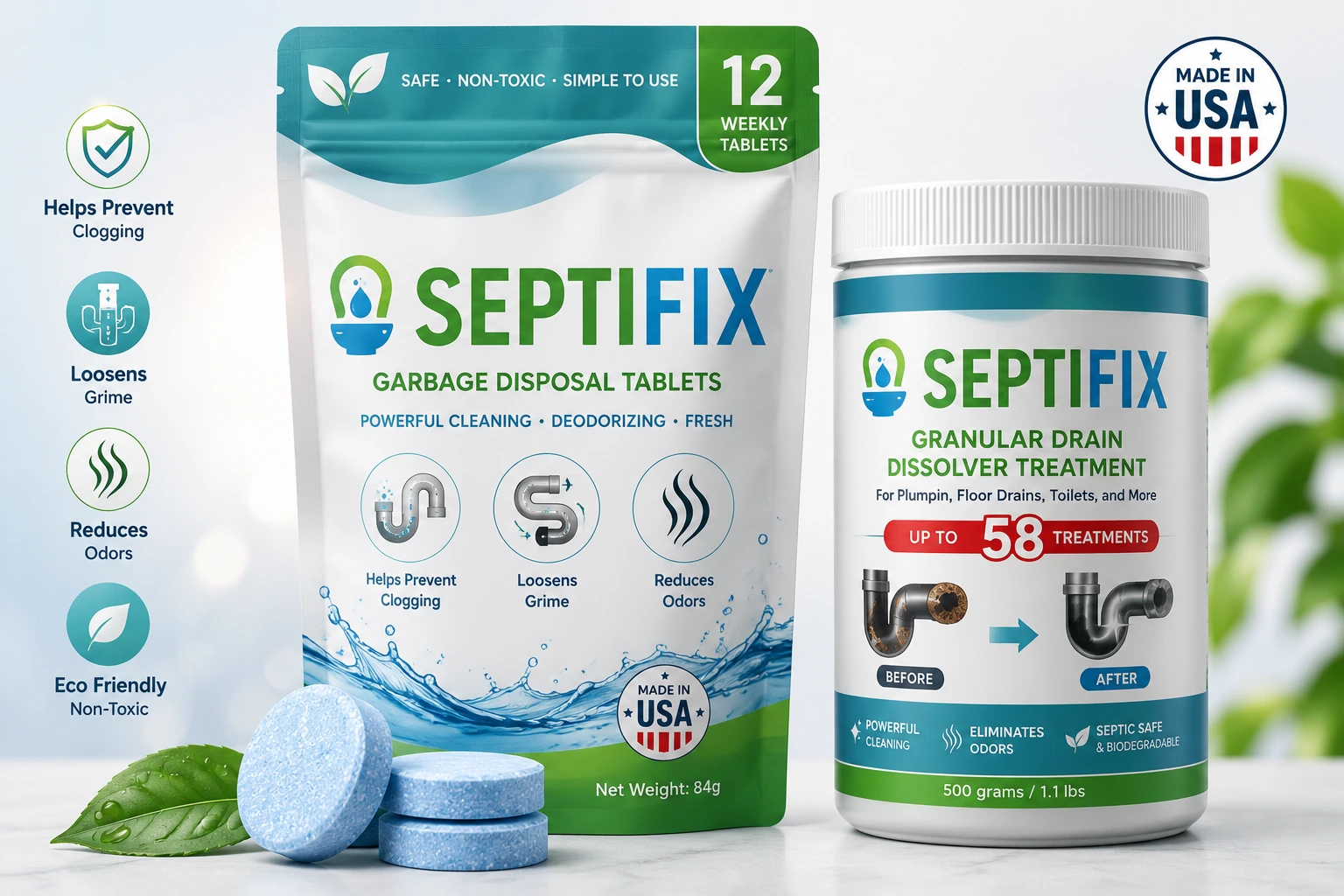
| Septifix | Tablet format, stated formulation, dosing directions and manufacturer claims | Verify the current ingredients and evidence for each advertised benefit |
| RID-X | Powder or other currently available formulation, label directions and cost per dose | Familiarity and availability do not prove that additives are necessary |
| Bio-Clean | Bacteria-and-enzyme formulation, intended uses and application directions | Confirm which uses are specifically covered by the current product label |
| Green Gobbler Septic Saver | Available format, stated compatibility, treatment interval and price | Verify the current package instructions and tank-size guidance |
| Roebic septic treatment products | Exact product model, intended application and ingredient information | Different products from the same brand may serve different purposes |
Product availability, formulation, price, and directions can change. Confirm the current manufacturer's information before making a purchase. If you want a closer look at one option, read our Septifix Review 2026 or our head-to-head Septifix vs. RID-X comparison.
See Current Septifix Pricing
Check availability and current pricing on the official website.
Check Current PriceHow to choose between products
Before buying, ask these questions:
- Does the manufacturer clearly identify the product's intended use?
- Are ingredients and application instructions available?
- Is the product compatible with your septic system?
- What is the actual cost per recommended application?
- Are the performance claims supported by credible, independent evidence?
- Does the product make unrealistic promises about eliminating pumping or repairing a failed system?
A higher price, a larger number of ingredients, or an easy-to-use tablet format does not automatically mean better septic system performance.
Does Septic Tank Treatment Actually Work?
The answer depends on the product, the claim, and the condition of the system.
Septic tanks naturally contain microorganisms that help break down organic matter. According to the EPA, bacterial and chemical additives are generally unnecessary for domestic septic systems and may be ineffective or harmful.
This is important because marketing claims can make an additive sound like a substitute for routine maintenance. It is not.
Consider the difference between these claims:
- Breaking down organic matter: a product may contain ingredients intended to act on certain materials, but that alone does not prove a meaningful improvement in the whole system.
- Reducing odors: odor can have several causes, including plumbing traps, ventilation, blockages, or septic system problems. A treatment cannot address every cause.
- Reducing sludge: claims about sludge reduction need credible supporting evidence. Physical inspection and pumping remain important when solids accumulate.
- Restoring a drain field: an additive cannot be assumed to repair a damaged, saturated, or failing drain field.
- Eliminating pumping: no treatment should be relied on as a replacement for inspecting and pumping a septic tank when required.
For official guidance, read the EPA's Frequently Asked Questions on Septic Systems and its Septic Tank Additives Fact Sheet.
What Is the Best Septic Tank Treatment for Odors?
The best approach is to identify where the odor originates.
A sewer-like smell inside a bathroom may come from a dry plumbing trap, a blocked or faulty vent, or another plumbing problem. Odors outdoors may indicate a ventilation issue, a leak, an overloaded tank, or a drain field problem.
Start by checking for obvious plumbing issues and reviewing your maintenance records. If the odor persists, arrange an inspection by a qualified septic professional.
A product marketed for odor control may be worth evaluating for its specific intended use, but do not assume that an odor treatment will resolve the underlying cause.
Read our guide: Why Does My Septic Tank Smell? Common Causes and Fixes.
What Should You Do If Your Septic Tank Is Backing Up?
A backup is not a problem to solve by adding more treatment.
If wastewater is backing up into sinks, showers, or toilets, reduce water use and contact a qualified septic professional. A full tank, blocked pipe, clogged effluent filter, or drain field failure may require inspection and repair.
Do not open a septic tank or enter it yourself. Septic tanks can contain toxic gases and pose serious engulfment hazards.
If sewage has surfaced in your yard, keep people and pets away from the affected area and seek professional advice promptly.
How to Maintain a Septic Tank Without Relying on Additives
Good maintenance is more important than choosing a particular additive.
1. Inspect and pump when needed
The EPA's general guidance is to inspect a septic tank every one to three years and pump it approximately every three to five years. Actual timing depends on tank size, household occupancy, water use, solids accumulation, and system type.
See our detailed guide: How Often Should You Pump a Septic Tank?.
2. Be careful about what goes down the drain
Flush human waste and toilet paper only. Keep wipes, grease, cooking oils, dental floss, diapers, and other unsuitable materials out of the toilet and septic system.
Dispose of fats, oils, grease, and household chemicals appropriately rather than pouring them down drains.
3. Manage water use
Spread out heavy water use where practical. Excessive water entering the tank in a short period can interfere with settling and may overload the drain field.
Repair leaking toilets and faucets to prevent unnecessary water entering the system.
4. Protect the drain field
Avoid parking vehicles or placing heavy equipment over the drain field. Keep trees and deep-rooted plants away from system components, and do not build over the area without checking local requirements.
5. Keep maintenance records
Record inspections, pumping dates, repairs, and any recurring symptoms. These records help a professional assess your system and determine an appropriate maintenance schedule.
For more information, visit the EPA's SepticSmart homeowner resources.
Frequently Asked Questions
What is the best septic tank treatment to buy?
There is no universally best product. Compare intended use, verified ingredients, application directions, compatibility, cost, and credible evidence. For a normally functioning residential system, the EPA does not recommend routine bacterial or chemical additives.
Are septic tank additives necessary?
Generally, no. The EPA explains that domestic septic systems already contain microorganisms involved in waste breakdown and does not recommend routine additives. Consult a qualified professional if your system has an operational problem.
Can septic tank treatment replace pumping?
No. Additives do not physically remove accumulated sludge and scum. Inspection and pumping should be performed when required by the condition and maintenance needs of the system.
What is better: septic tank bacteria or enzymes?
They serve different biological roles. Bacteria are living microorganisms, while enzymes act on particular materials. Neither category is automatically necessary or proven to improve every residential septic system.
Can septic tank treatment fix a bad smell?
Not necessarily. Odors may originate from plumbing traps, vents, leaks, blockages, or a malfunctioning septic system. Identify the cause before choosing a remedy.
How often should septic tank treatment be used?
There is no universal schedule for additives. If you choose to use a product, follow its current label directions and do not exceed the recommended dose. Routine additive use is not a substitute for professional maintenance. See how to use septic tank treatment correctly for common mistakes to avoid.
Is septic tank treatment safe for every septic system?
No product should be assumed suitable for every system. Check the product label, ingredients, and system compatibility. Advanced or alternative systems may have specific maintenance requirements.
What is the difference between septic tank treatment and septic tank pumping?
Treatment products are applied to the system and may contain ingredients intended to affect biological activity or particular materials. Pumping physically removes accumulated solids and scum from the tank. These are different activities, and an additive does not replace pumping.
Final Verdict: Choose Evidence Over Marketing Claims
The best septic tank treatment is not necessarily the product with the strongest advertising, the most ingredients, or the most ambitious promises.
Start by understanding your system and the problem you want to solve. Compare product instructions and credible evidence, avoid relying on additives to correct structural or operational failures, and maintain a regular inspection and pumping schedule.
For most homeowners, responsible septic system care begins with proper use, sensible water management, and professional maintenance, not with a bottle, powder, or tablet. If you do decide to try a monthly treatment, our full Septifix Review 2026 explains what it is, how it is used, and where it fits.
Editorial note: This guide is for general educational purposes and does not replace advice from a qualified septic system professional. Product information and recommendations should be checked against current manufacturer documentation. CleanSepticUSA may earn a commission from qualifying purchases through affiliate links, at no additional cost to the buyer.